Ant Control in Conroe, TX
Expert treatment for fire ants, carpenter ants, and household ant invasions.
Fire ants are the ant problem most Conroe homeowners actually call about — and for good reason, since Montgomery County sits squarely in the red imported fire ant’s range in Texas. But they’re not the only ant working its way into local homes. If mounds keep coming back in the same spots in your yard, or you’re finding trails of ants inside near a sink or window, the fix depends on getting the species right first.
This guide covers the ants that actually cause problems for Conroe properties, why fire ant mounds seem to reappear no matter how many times they’re kicked over or sprayed, how to tell a fire ant mound from other ant activity, and what a real treatment program looks like versus a one-time yard spray.
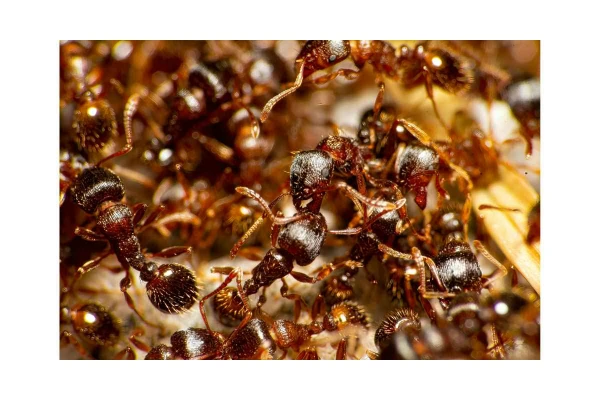
Fire Ants: Why Conroe’s Climate and Soil Keep Them Coming Back
Red imported fire ants thrive in exactly the conditions Conroe provides most of the year:
- Warm soil temperatures for most of the year mean colonies stay active and keep expanding instead of going dormant for a long winter.
- Open, sunny areas — new sod, freshly cleared lots, and the edges of drainage easements common in newer subdivisions — are prime real estate for a queen to start a new mound.
- Rain actually helps them spread: after heavy rain or flooding, fire ant colonies will raft together on the water’s surface and relocate, which is why new mounds often appear in different spots after a storm.
Why Kicking Over a Mound (or Spraying Just the Mound) Doesn’t Work
A visible mound is only the part of the colony closest to the surface — the queen and most of the colony are safely underground, often connected to satellite mounds nearby that aren’t visible at all. Disturbing or spraying a single mound usually just triggers the colony to relocate a few feet away, which is why the same yard can seem to have an endless supply of new mounds. An effective program treats the property as a whole, not mound-by-mound.

Other Ants Common in Conroe Homes
A few other species show up regularly in local service calls, and each one calls for a different approach:
- Odorous house ants — small, dark ants that leave a distinct smell when crushed, commonly trailing along baseboards or countertops toward a moisture source or sweet food.
- Carpenter ants — larger, black ants that don’t eat wood but excavate it to nest, often a sign of an existing moisture problem in a wall, window frame, or fascia board.
- Crazy ants (tawny/raspberry crazy ants) — fast-moving, erratic ants that have been spreading through parts of Southeast Texas and can occur in overwhelming numbers, sometimes even displacing fire ants in an area.
How to Tell Which Ant You’re Dealing With
Fire ant mounds are usually dome-shaped, loose soil piles with no visible entry hole on top (unlike some other ants), and disturbing one brings an aggressive, fast response and painful stings within seconds. Ants trailing indoors along a consistent path, especially toward a kitchen or bathroom, are far more likely to be odorous house ants or, if the trail leads to a damp wall or window frame, carpenter ants worth a closer look.

What an Effective Ant Program Actually Involves
A proper program typically combines a broadcast bait or granular treatment across the whole property — which worker ants carry back to the colony and queen, eliminating it at the source — with direct treatment of any active mounds found during inspection, and a perimeter application around the structure to intercept ants before they reach doors and windows. Most Conroe properties do well on a quarterly service to stay ahead of new colonies moving in from neighboring lots.