Wasp & Bee Control in Conroe, TX
Safe removal of wasp nests and bee colonies around your Conroe property.
Wasp and hornet nests build fast in a Conroe spring and summer — a paper wasp nest can go from a few cells to dozens of active workers in just a few weeks once the weather warms up. If you’ve spotted a nest under an eave, inside a porch light fixture, or noticed ground-nesting activity in the yard, the safest move is almost always professional removal rather than a DIY spray from a ladder.
This guide covers the stinging insects most common around Conroe homes, how to tell them apart, why nests seem to reappear in the same spots year after year, and what safe, effective removal actually involves.
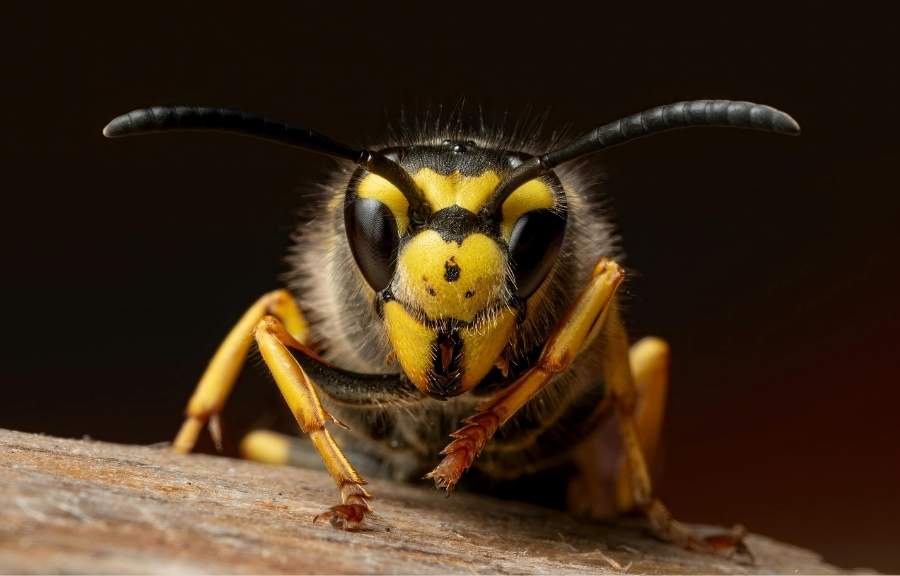
The Stinging Insects Most Common in Conroe
- Paper wasps — build the open, umbrella-shaped nests commonly found under eaves, porch ceilings, and inside grills or mailboxes. Generally less aggressive unless the nest itself is disturbed.
- Mud daubers — solitary wasps that build distinctive tube-shaped mud nests on walls, fences, and under patio covers. They’re not aggressive and rarely sting, but their nests are often mistaken for something more dangerous.
- Yellow jackets — far more aggressive, often nesting in the ground, in wall voids, or under structures, and known for stinging multiple times when a nest is disturbed. Ground nests are especially common along tree lines and yard edges in Conroe.
- Honeybees — occasionally build hives in tree cavities, sheds, or wall voids. Because honeybees are protected pollinators, removal is typically handled differently than wasp or hornet nests, often through live relocation rather than elimination.
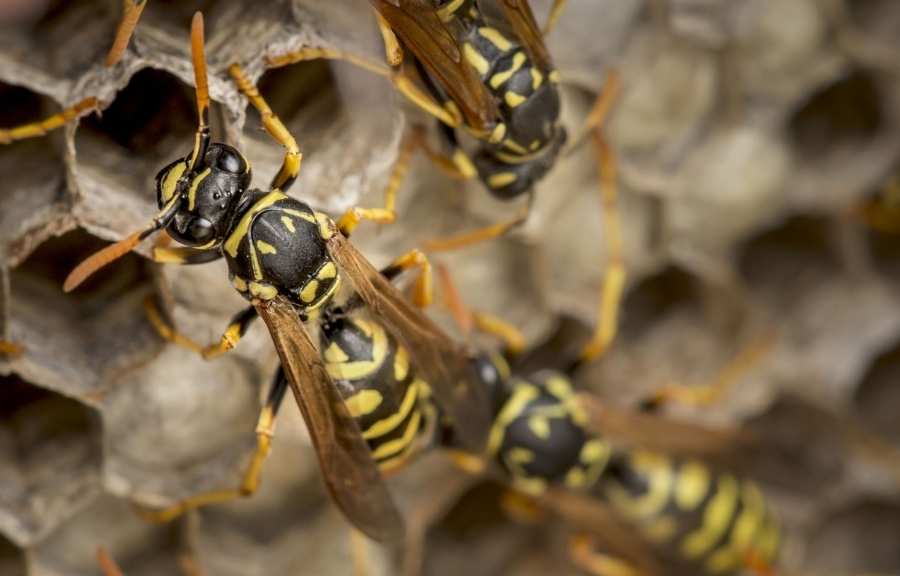
Why Nests Show Up in the Same Spots Every Year
Eaves, soffits, and porch ceilings offer the same qualities every season — shelter from rain, elevation from ground predators, and easy access to the yard for foraging — so if a nest was removed from a particular corner last year without addressing the conditions that attracted it, a new colony will often start in the exact same spot the following spring.
Why DIY Removal Is Riskier Than It Looks
A can of wasp spray from the ground can work on a small, low nest, but it comes with real risk: disturbing a nest without fully neutralizing it first often triggers a defensive swarm, and a person on a ladder near an active nest has far less ability to retreat quickly if that happens. Ground-nesting yellow jackets are particularly dangerous to disturb accidentally with a lawnmower or trimmer before a nest is even spotted.
What Professional Removal Involves
A proper visit starts with correctly identifying the species (since honeybees are handled differently than wasps or yellow jackets), locating all active nests on the property rather than just the one that was spotted, treating or removing the nest using the appropriate method and protective equipment, and checking nearby areas for satellite activity, since some species will start a second nest close to the first.