Bed Bug Control in Conroe, TX
Fast, discreet bed bug inspections and treatment — same-day service available.
Bed bugs aren’t a sign that a home is dirty — they’re hitchhikers that travel in luggage, used furniture, and shared laundry, and they can show up in any home, apartment, or hotel in Conroe. If you’re seeing small reddish-brown bugs, rust-colored spotting on sheets, or waking up with unexplained bite marks in a line, the sooner you get a real inspection, the smaller and cheaper the treatment.
This guide walks through how to actually identify bed bugs, how they spread, what treatment options exist, and what to expect if you’re dealing with them for the first time — including the part nobody else says out loud: there’s no shame in this, and the fastest path out is calling it in early instead of waiting.
Signs of Bed Bugs — What to Actually Look For
- The bugs themselves: flat, oval, reddish-brown, about the size of an apple seed (adults) or smaller and paler (nymphs). They hide in seams, not out in the open, so you’re more likely to find evidence than the bug itself during the day.
- Rust or dark spotting on sheets and mattress seams — this is digested blood, left behind as they feed at night.
- Small, pale eggs and eggshells tucked into mattress seams, box spring corners, and headboard joints.
- Bites in a line or cluster, usually on skin exposed while sleeping — though not everyone reacts to bites, so absence of bite marks doesn’t rule bed bugs out.
- A faint, musty, sweetish odor in a heavily infested room — usually only noticeable once an infestation is well established.
How Bed Bugs Actually Spread
Bed bugs don’t fly or jump, and they don’t show up because a home is unclean — they travel. The most common ways they enter a Conroe home:
- Secondhand or rental furniture, especially upholstered pieces and mattresses
- Luggage after travel — hotels, extended-stay properties, and shared transportation are common sources regardless of how clean the destination was
- Shared laundry facilities in apartments and multi-family housing
- Visitors’ bags, coats, or backpacks brought into the home
- Moving boxes or furniture from an already-infested location
Because they travel this way, a bed bug problem can appear in a brand-new home just as easily as an older one, and it can appear in one bedroom without immediately spreading through the whole house — which is exactly why early treatment matters: it’s far easier to treat one room than an entire home.

Heat Treatment vs. Chemical Treatment
| Heat treatment | Chemical (liquid/dust) treatment | |
|---|---|---|
| How it works | Raises room temperature high enough, long enough, to kill bed bugs and eggs throughout the space — including inside walls, furniture, and other harborage that’s hard to inspect directly | Targeted application of EPA-registered insecticides to cracks, seams, and known harborage points, often requiring more than one visit |
| Speed | Often resolved in a single treatment day | Typically needs a follow-up visit 2–3 weeks later to catch newly hatched eggs |
| Best for | Full rooms or units with an established infestation, or when speed matters | Smaller or early-stage infestations, or spaces where heat treatment isn’t practical |
| Prep required | Heat-sensitive items (candles, some electronics, vinyl records) need to be removed beforehand | Bedding laundering and some decluttering, generally less prep-intensive |
Many real infestations respond well to either approach, and some situations call for a combination. Which one makes sense depends on how widespread the infestation is and the specific space — that’s determined at inspection, not guessed at over the phone.
What an Inspection Actually Involves
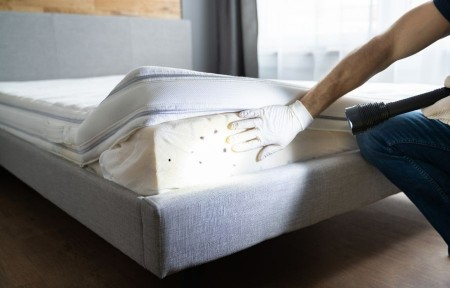
A proper bed bug inspection checks mattress seams, box spring corners, headboard and bed frame joints, baseboards, outlet covers, and upholstered furniture near the bed — the places bed bugs actually hide during the day. Some pest control companies also use trained detection dogs, whose sense of smell can locate an infestation faster and more precisely than a visual inspection alone, especially in early-stage cases where visible evidence is minimal.
There’s No Shame In This — Here’s the Honest Version
Bed bugs carry a stigma they don’t deserve. They are not a reflection of how clean a home is — they’re opportunistic hitchhikers, and they show up in five-star hotels and spotless homes just as often as anywhere else. If you found bed bugs in a child’s room, a guest bed, or anywhere else that feels especially upsetting, that reaction is completely understandable — and it’s also exactly why calling in early matters more than anything else. The earlier a bed bug problem is treated, the smaller, faster, and less expensive it is to resolve, and a same-day or next-day inspection is always available. Nobody who calls in about bed bugs gets judged for it.
What Bed Bug Treatment Costs
Bed bug treatment cost depends on the treatment method, the size of the space, and how widespread the infestation is by the time it’s treated — which is the biggest reason early action saves money. For general pricing context across pest control services, see our Conroe pest control pricing guide. Conroe Pest Control can give you an exact quote after a free, no-judgment inspection.