Termite Control in Conroe, TX
Licensed termite inspections and treatment for Conroe homes and new construction.
Conroe has real, above-average termite pressure — both subterranean and the more aggressive Formosan termite — driven by warm, humid soil conditions that never fully cool down. If you’re seeing discarded wings on a windowsill in spring, mud tubes on a foundation, or you just bought new construction on a former wooded or agricultural lot, the right move is a professional inspection, not a wait-and-see approach.
This guide covers what actually matters if you live in Conroe: why this area’s termite risk is different from other parts of Texas, how to tell early termite damage from ordinary wood wear, what new-construction homeowners specifically need to know, and how professional treatment actually works.
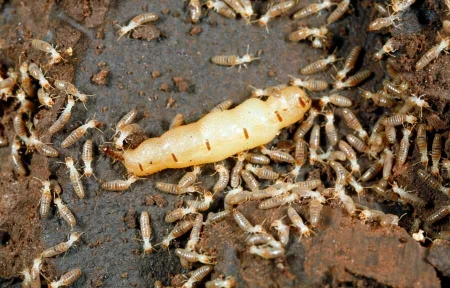
Why Conroe Has More Termite Pressure Than Most Texas Cities
Termites need three things to thrive: moisture, warmth, and a food source (wood/cellulose). Conroe’s climate hands them all three almost year-round:
- Humidity stays high even in the driest months — Conroe’s relative humidity rarely drops below the mid-60s even in August, keeping subterranean colonies active instead of retreating.
- Winters rarely produce a hard, sustained freeze, so colonies don’t get knocked back the way they do farther north — activity just continues at a slower pace through winter.
- Rapid new construction on former forest and farmland — Conroe’s population grew from roughly 89,956 in 2020 to 114,581 in 2024, a 27.4% increase, among the fastest in Texas. New subdivisions are built directly on top of existing termite habitat, since colonies live in the soil, not the trees that were cleared.
Subterranean vs. Formosan Termites — What’s Actually in Conroe
Two species matter most locally:
- Subterranean termites are the most common. They live in the soil, build pencil-width mud tubes to travel up foundations out of sunlight, and a mature colony can number in the hundreds of thousands.
- Formosan termites are a more aggressive, faster-eating relative capable of building larger colonies and causing damage faster. Their activity has been confirmed across the Gulf Coast region of Texas, and Conroe’s warm, humid conditions are hospitable to them — one reason a generic “termite spray” isn’t as reliable here as a proper inspection and species-appropriate plan.
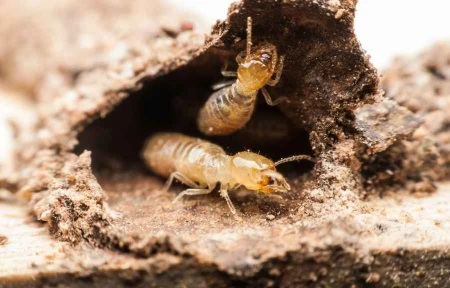
Termite Swarm Season in Conroe: What to Watch For
Termite swarms — the reproductive alates that leave a mature colony to start new ones — typically appear in a 4–6 week window each spring, usually right after the season’s first sustained warm rain. Between March and May, treat any of the following as a signal to schedule an inspection:
- Discarded, translucent wings on windowsills, along baseboards, or in spiderwebs near light fixtures
- A brief swarm of winged insects near a light source at dusk (often mistaken for flying ants)
- Mud tubes, roughly pencil-width, running up an exterior foundation wall or through a crawl space
- Wood that sounds hollow or “papery” when tapped, especially near ground contact points like door frames, deck posts, or baseboards

New Construction in Conroe: Yes, It Can Already Have Termites
This is one of the most common — and most misunderstood — situations we see locally. Homeowners in newer Conroe-area subdivisions built on recently cleared wooded or agricultural lots sometimes assume a home built two or three years ago is too new to have a termite problem. It isn’t. Subterranean colonies live in the surrounding soil, not the structure itself, so a colony already established on that land before construction can move into a brand-new foundation just as easily as an old one — often faster, since new-construction lumber and grade stakes left in the soil can give a colony an easy first meal.
If you closed on new construction in Conroe within the last 1–3 years and haven’t had a termite inspection yet, that’s the single highest-value inspection you can schedule, even with zero visible signs.
For homes still being built, soil-applied pre-treatment before the slab is poured is the most effective and least invasive point to prevent a future infestation. And for real estate closings, Texas transactions frequently require a Wood-Destroying Insect (WDI) report — a licensed inspection that documents current condition, existing damage, and any active treatment. If you’re buying or selling in Conroe, that’s required paperwork and genuinely useful information regardless of the transaction.

How Professional Termite Treatment Works
Two treatment approaches are used industry-wide, often together:
- Liquid soil treatments create a continuous treated zone in the soil around and beneath the structure, so subterranean termites can’t cross it undetected to reach the wood above.
- Monitoring and baiting systems place bait stations around the property’s perimeter; termites feed on the bait and carry it back to the colony, which can eliminate the colony at its source rather than just at the point of entry.
Which approach — or combination — makes sense depends on the property, the species involved, and whether this is prevention or an active infestation. That’s a decision to make after an inspection, not before one.
What a Termite Inspection Actually Costs
Termite treatment pricing depends heavily on the size of the property, the extent of any existing damage, and whether this is a one-time WDI inspection, a pre-treatment, or active-infestation treatment. For typical ranges across service types — general pest control, termite-specific treatment, and recurring plans — see our Conroe pest control pricing guide. Conroe Pest Control can provide an exact, property-specific quote after a free inspection.