Cockroach Control in Conroe, TX
Local, effective cockroach treatment for Conroe homes and businesses.
Seeing a cockroach in a Conroe home during the day, not just at night, is usually a sign the population indoors is already established rather than a one-off visitor from outside. Between our humidity, mild winters, and the sheer number of mature trees around most older neighborhoods, roaches have an easy time getting established here — and by the time they’re visible in daylight, there are typically far more hiding than you’ve actually seen.
This guide covers the roach species most common in Montgomery County, why a single sighting usually means more are hidden nearby, the difference between a minor outside issue and a real infestation, and what an actual treatment program looks like.
Why Cockroaches Do So Well in Conroe Homes
Cockroaches need warmth, moisture, and food debris to thrive, and Conroe provides all three for most of the year:
- High humidity, especially in crawl spaces, bathrooms, and kitchens, gives roaches the moisture they need without having to search far.
- Mild winters mean outdoor roach populations rarely die off completely, so there’s a steady supply moving toward structures looking for shelter, especially as temperatures shift in fall and spring.
- Mature, tree-lined neighborhoods and homes near wooded lots give outdoor species like the smoky brown cockroach easy cover right up to the foundation.
The Cockroaches Actually Common in Montgomery County
- German cockroaches — small, tan, and the species most associated with an indoor infestation, almost always concentrated in kitchens and bathrooms near food and water sources. These reproduce quickly and are the type most likely to require a structured, multi-visit program.
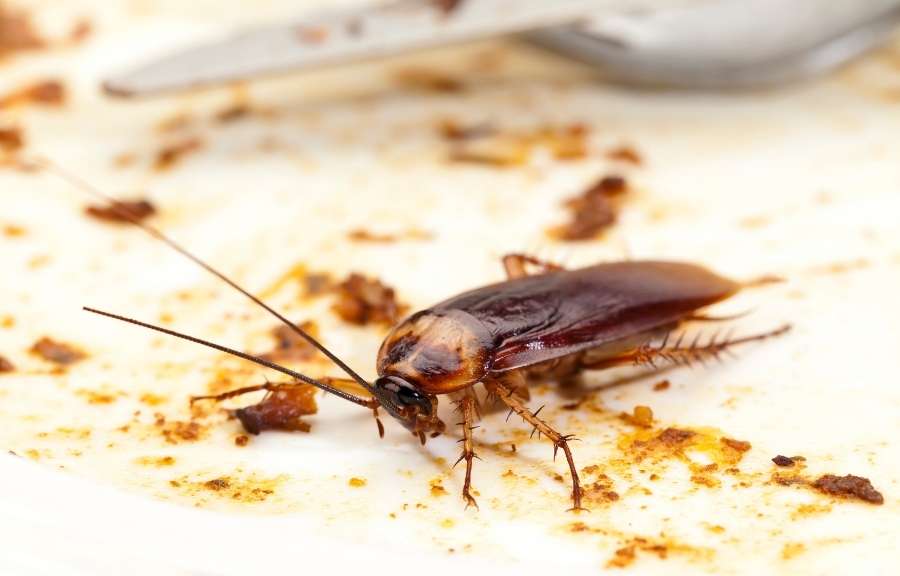
- American cockroaches (often called palmetto bugs locally) — large, reddish-brown roaches that typically live outdoors or in crawl spaces, sewers, and drains, and wander indoors especially after rain or during a temperature swing.
- Smoky brown cockroaches — a dark, outdoor species common around mulch beds, woodpiles, and gutters in tree-heavy neighborhoods, occasionally finding their way into garages or attics.
One Roach at Night vs. a Real Infestation — What’s the Difference?
An occasional American or smoky brown cockroach wandering in from outside, especially after rain, isn’t necessarily a sign of an indoor infestation — it happens even at well-maintained homes near wooded lots. What does point to an established indoor problem is seeing German cockroaches specifically, spotting roaches during daylight hours, noticing a musty odor in a cabinet or pantry, or finding small dark droppings (resembling ground pepper or coffee grounds) along baseboards or in drawers.

What an Effective Cockroach Program Looks Like
Roach control isn’t a single spray — it’s a layered process: identifying the species and their harborage points (behind appliances, under sinks, inside cabinet voids), applying targeted gel baits and growth regulators where roaches are actually nesting, treating cracks and crevices rather than just open surfaces, and following up to confirm the population is actually declining rather than just temporarily scattered. For an established German cockroach infestation, this typically takes more than one visit to fully resolve.